
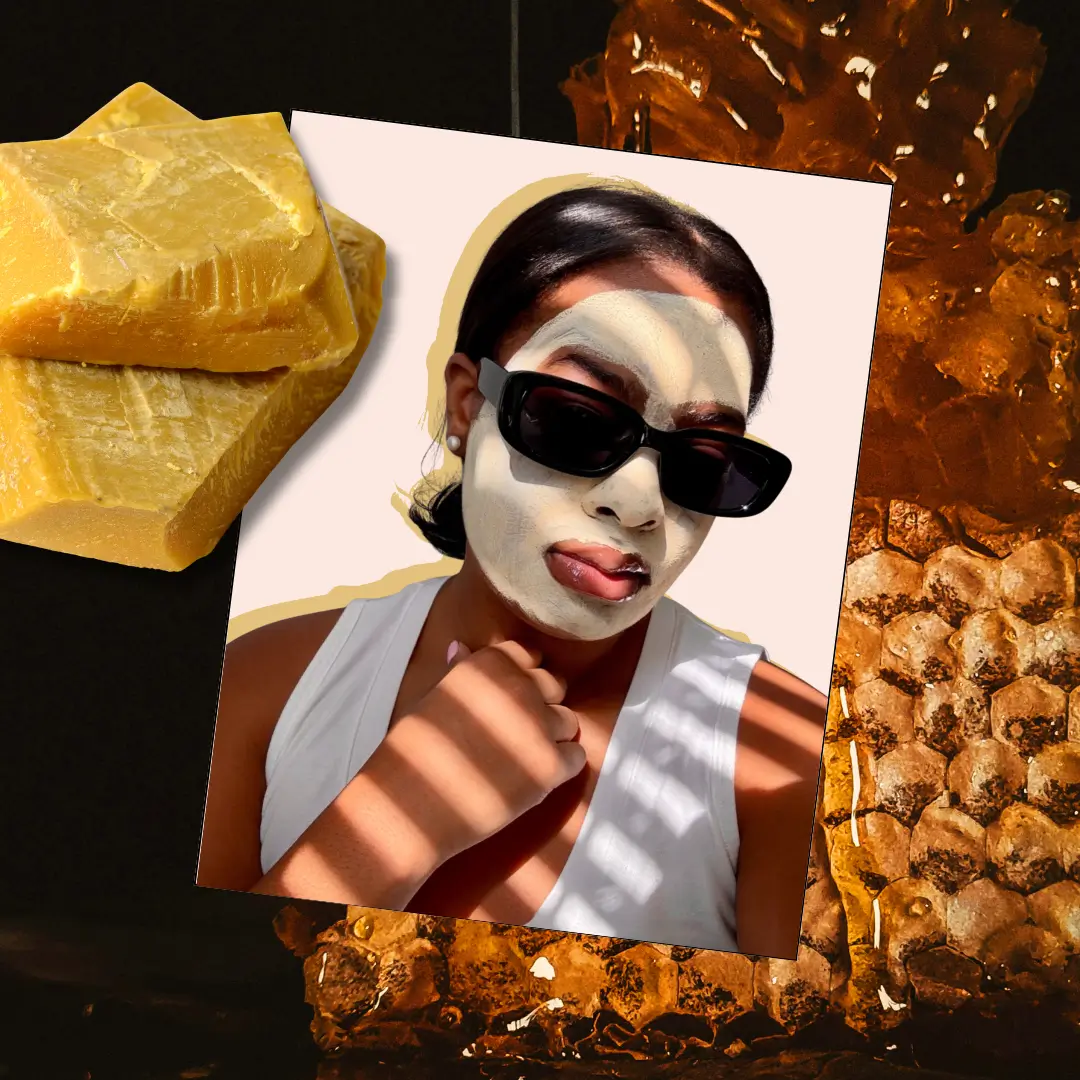
For the longest time, I thought beeswax had exactly one job: keeping lip balm in stick form. A background ingredient.
The “best supporting actor” of skincare, if you will.
Then I actually read the research and… well, let’s just say I owe beeswax an apology.
People have been putting this stuff on their skin for thousands of years (yes, really), and modern dermatology is finally catching up.
PIN FOR LATER 📌

The Egyptians used it in medicinal ointments, Ayurvedic medicine has relied on it for centuries, and the Romans reportedly valued it so highly that they collected 100,000 pounds of it as tribute from conquered territories.
Imagine accepting payment in candle supplies. Iconic, honestly.
Fast forward a couple of millennia, and peer-reviewed research is confirming what natural formulators have known all along: this ingredient works.
So here’s why beeswax deserves a permanent spot in your skincare routine, and how to start using it.
What Beeswax Actually Is
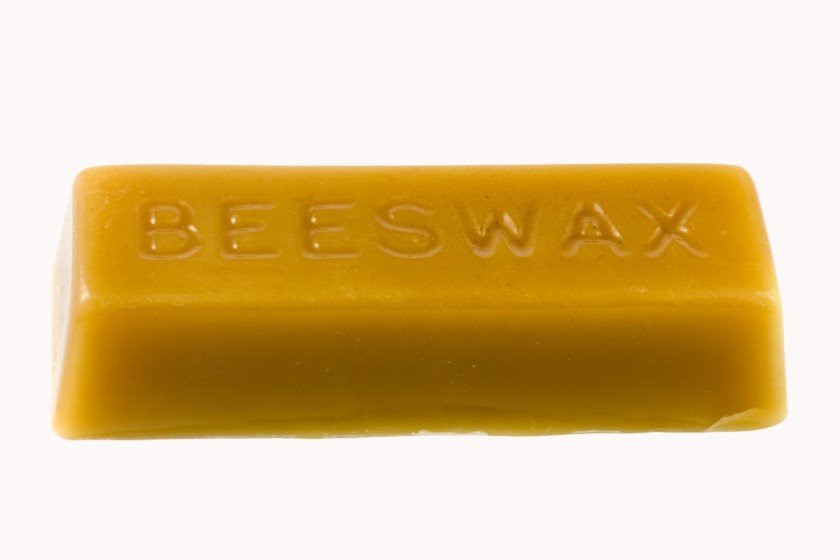
Beeswax is a natural substance made by worker bees, who use it to build the honeycomb cells inside the hive. (Tiny architects. We love to see it.)
Its color ranges from white to golden yellow, depending on the bees’ diet, their location, and how much contact the wax has had with honey and pollen.
For skincare and cosmetics, it’s commercially sourced from bees of the genus Apis, mainly A. mellifera. It comes in two forms: yellow beeswax (Cera flava) and white beeswax (Cera alba), which is simply a refined, bleached version.
The FDA has designated both yellow and white beeswax as Generally Recognized as Safe (GRAS). That’s reassuring when you’re putting something on your face every single day.


The Science Behind Beeswax for Skin
A 2023 narrative review published in the Journal of Cosmetic Dermatology by researchers at UC Davis looked at what makes beeswax so effective in skincare.
Their answer? It works as three different types of skincare ingredients at once.
Most ingredients are one-trick ponies. Beeswax is a triple threat.
- As an occlusive: Beeswax forms a semi-protective film on your skin that slows transepidermal water loss (TEWL), which is the moisture your skin quietly loses throughout the day. Lower TEWL means a better-functioning skin barrier and skin that stays hydrated for longer.
- As a humectant: Unlike pure occlusives that just sit on top of your skin, beeswax also helps draw moisture into the skin instead of only sealing in what’s already there.
- As an emollient: It softens and smooths the skin’s surface, which is why beeswax products tend to feel noticeably silkier than products without it.
That triple action is rare in any single ingredient, natural or synthetic. It’s also the main reason beeswax keeps turning up on the ingredient lists of products that actually deliver.
Key Beeswax Skin Benefits
It Protects and Strengthens the Skin Barrier
The same 2023 review highlighted a clinical study in which a beeswax-containing moisturizer went head-to-head with two commercial barrier creams.
The participants were dental laboratory technicians prone to irritant contact dermatitis. (Not the most glamorous test group, but a seriously tough one.)
The beeswax moisturizer won by a mile. A full 98% of participants using it reported a “good” or “very good” response, compared to just 67% for the best-performing commercial cream.
The beeswax group also saw a statistically significant drop in TEWL, which means their skin barriers were measurably stronger after using it.
It Soothes Dry and Sensitive Skin
If your skin runs dry, reactive, or just generally grumpy, beeswax is worth a closer look.
Dry skin tends to get stuck in a loop: a compromised barrier loses more moisture, losing moisture makes the skin more irritated, and irritation weakens the barrier even further.
Fun!
Because beeswax slows moisture loss and softens the skin’s surface at the same time, it helps break that cycle. Use it regularly and you can keep the cycle from starting in the first place.
It Can Help With Dermatitis and Psoriasis
This is where the research gets really interesting. A clinical study by Al-Waili, published in Complementary Therapies in Medicine, tested a mixture of honey, olive oil, and beeswax on patients with atopic dermatitis and psoriasis.
In the atopic dermatitis group, 80% of patients who hadn’t had prior treatment showed significant improvement in their signs and symptoms. For patients already on corticosteroids, the mixture helped reduce the dose they needed.

Among psoriasis patients, 50% showed marked improvement, again with less reliance on corticosteroids for those already using them.
To be clear, this doesn’t mean beeswax replaces medical treatment for either condition.
It does suggest that if you’re dealing with chronic skin inflammation, beeswax-based skincare could be a useful addition alongside whatever your dermatologist recommends.
(And if honey’s role here has you curious, these DIY honey facial mask recipes are a fun place to start.)
It Has Natural Antimicrobial Properties
Beeswax, especially when it contains propolis, has shown antimicrobial activity against a range of bacteria, according to research cited in the Journal of Cosmetic Dermatology review.
These include Staphylococcus aureus, Streptococcus pyogenes, Pseudomonas aeruginosa, and E. coli, as well as the yeast Candida albicans.
Translation for your skin?
Less chance of bacterial overgrowth on the surface. That matters more than most people realize for things like acne, dermatitis, and fungal skin infections.
If breakouts are your main concern, pair this with my roundup of homemade face masks for acne or my guide to the benefits of salicylic acid for skin.
It Won’t Clog Your Pores
One of the most persistent skincare myths out there is that natural waxes automatically clog pores.
Beeswax is actually non-comedogenic, so it won’t block your pores or cause breakouts.
Research cited in the 2023 review confirmed its low comedogenic potential, which makes it suitable for most skin types, including oily and acne-prone skin.
That said, if your skin is on the dramatic side, shall we say, patch test anything new first. Always.
It’s Gentle Enough for Sensitive Skin
Contact allergy to beeswax is rare. A large multicenter UK study patch tested 2,828 people and found that only 0.45% reacted to beeswax, compared to 1.9% for propolis.
Most reactions to beeswax products have actually been traced back to contaminants like propolis or plant resins in unpurified beeswax, not the beeswax itself.
So if you have sensitive skin and you’re hunting for natural skincare ingredients with a solid safety record, beeswax is one of the better options out there.
It Helps With Chapped Lips
Okay, this one you probably saw coming, and for good reason. The same properties that make beeswax so effective in body care make it exceptional for your lips.
It shields the delicate skin on your lips from the elements, locks in moisture, and creates a barrier that stops them from drying out even more.
A good beeswax lip balm isn’t simply coating your lips. It’s actively helping them repair.
For a full lip care routine, start with a DIY exfoliating lip scrub, follow up with an overnight treatment (here are the benefits of a lip mask), and keep one of the best Korean lip balms in your bag.
How to Use Beeswax in Your Skincare Routine
The easiest way to start is with products that already contain it: lip balms, body butters, lotion bars, hand creams, and skin salves.
Check the ingredient list for beeswax (sometimes labeled Cera flava or Cera alba).
Ideally, you want it alongside other nourishing ingredients like shea butter, coconut oil, or almond oil. (You can even make almond oil at home, if you’re feeling ambitious.)
And if you’re a DIY skincare person, beeswax is one of the most versatile ingredients you can have on your shelf.
It’s the base of homemade lip balms, lotion bars, body butters, and healing salves, and it gives your creations that professional, stable texture that’s tricky to get with oils and butters alone.
WANT TO MAKE YOUR OWN BEESWAX SKINCARE? START HERE:
- How to Make Beeswax Lotion Bars (The Solid Moisturizer You’ll Actually Use)
- How to Make Beeswax Lip Balm at Home (And Actually Use It Every Day)
- How to Make a Beeswax Body Butter at Home (The Whipped Version That Feels Like Luxury)
What to Look for When Buying Beeswax
Buying beeswax for your own skincare recipes? Keep these in mind:
- Pellets vs. blocks: Pellets melt more evenly and are much easier to measure than a solid block. (Trust me, grating a beeswax block is a workout nobody needs.) Start with pellets.
- Yellow vs. white: Yellow beeswax is less processed and keeps more of its natural components, including propolis. White beeswax is more refined with a neutral scent, which is handy if you’re adding essential oils and don’t want the beeswax competing with them.
- Organic and natural sourcing: Look for beeswax that’s minimally processed and transparently sourced. Organic beeswax is worth seeking out for anything that’s going on your skin daily.
Final Thoughts
Beeswax has earned its spot in skincare through centuries of use and, now, actual clinical research.
It protects your skin barrier, locks in moisture, soothes inflammation, and brings natural antimicrobial benefits to whatever formula it’s in. On top of all that, it’s gentle enough for sensitive skin and non-comedogenic enough for oily skin.
For an ingredient that’s been around since ancient Egypt, it’s aging remarkably well. (Honestly? Goals.)
References
Nong Y, Maloh J, Natarelli N, Gunt HB, Tristani E, Sivamani RK. A review of the use of beeswax in skincare. J Cosmet Dermatol. 2023;22:2166-2173. doi:10.1111/jocd.15718
Al-Waili N. Topical application of natural honey, beeswax and olive oil mixture for atopic dermatitis or psoriasis: partially controlled, single-blinded study. Complement Ther Med. 2003;11(4):226-234. doi:10.1016/s0965-2299(03)00120-1
Kurek-Górecka A, Górecki M, Rzepecka-Stojko A, Balwierz R, Stojko J. Bee products in dermatology and skin care. Molecules. 2020;25(3):556. doi:10.3390/molecules25030556