
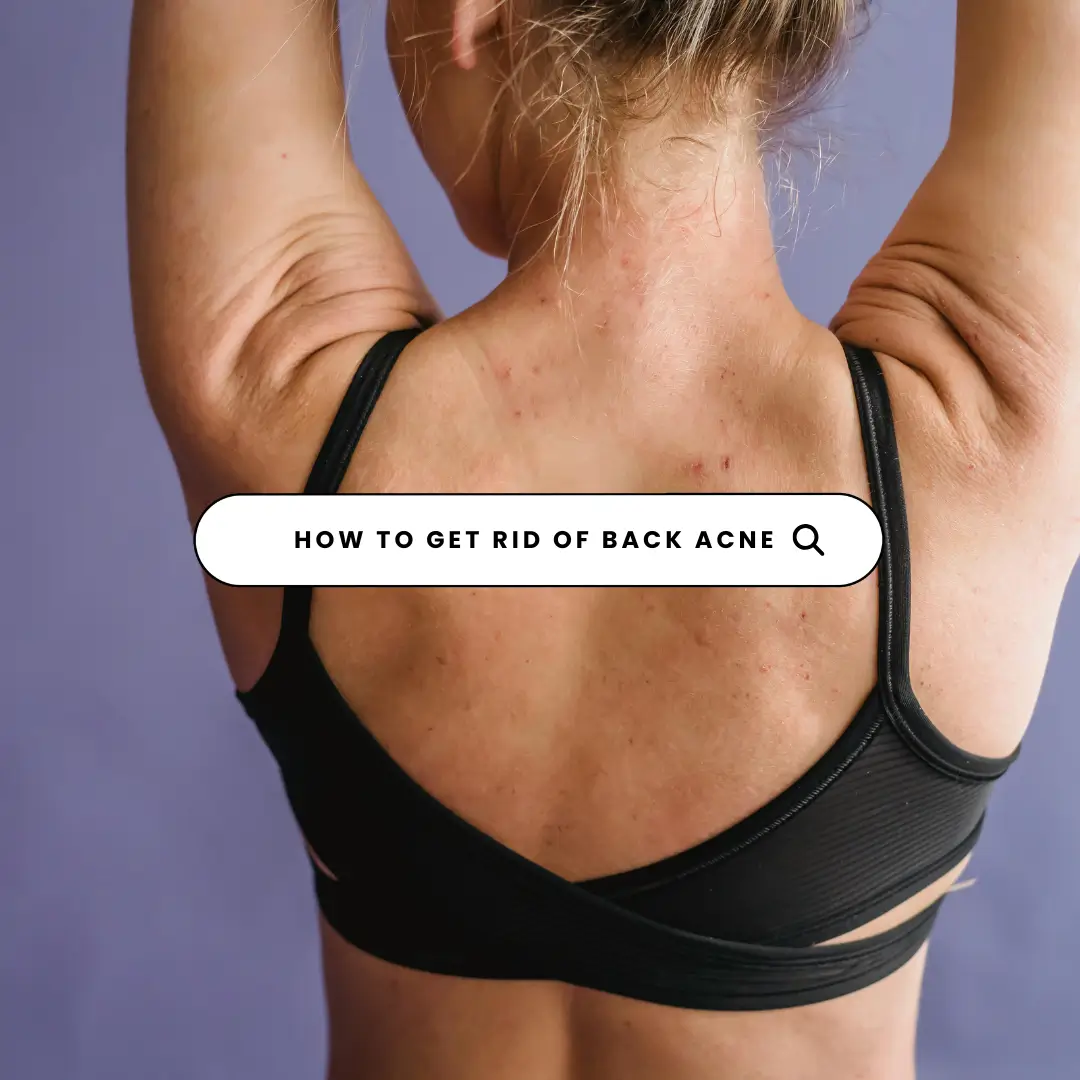
Back acne is one of those skin concerns that doesn’t get nearly enough airtime, mostly because it’s easy to ignore when it’s out of sight.
But the moment summer arrives and backless tops and swimwear enter the picture, it becomes very difficult to overlook.
PIN FOR LATER 📌

The frustrating part is that back acne can be genuinely stubborn, and what works on your face doesn’t always translate to your body.
Different skin, different rules.
The good news is that with the right approach, back acne is very treatable. It just requires a little more consistency and patience than most people expect.
Why Back Acne Happens

Before you can treat it properly, it helps to understand what’s actually going on.
The skin on your back has a higher concentration of sebaceous glands than almost anywhere else on your body, which means more oil production and a higher likelihood of clogged pores.
Add sweat, friction from clothing, and the fact that your back is genuinely difficult to cleanse thoroughly, and you have a pretty ideal environment for breakouts to develop.
Back acne can also be triggered or worsened by a few specific factors:
- Sweat and friction. Wearing tight workout gear, carrying a backpack, or sitting against a chair for long periods can all contribute to what’s sometimes called “acne mechanica,” breakouts caused by repeated physical pressure and heat on the skin.
- Hair products. This one surprises people. Conditioners, hair masks, and styling products that run down your back during washing can clog pores and trigger breakouts along the hairline and upper back. It’s more common than you’d think.
- Diet and hormones. Just like facial acne, back acne can be influenced by hormonal fluctuations, stress, and diet. If your breakouts follow a clear hormonal pattern, it’s worth discussing with a dermatologist.
- Inadequate cleansing. The back is hard to reach, which means it often doesn’t get cleansed as thoroughly as it should, especially after sweating.




How To Treat Back Acne
Swap Your Body Wash
The first and most impactful change you can make is switching to a body wash formulated with acne-fighting ingredients. Look for salicylic acid, which exfoliates inside the pore and helps prevent blockages, or benzoyl peroxide, which kills the bacteria responsible for inflamed breakouts. Use it consistently every time you shower and let it sit on the skin for a minute or two before rinsing for maximum effect.
Exfoliate, But Not Aggressively
Regular exfoliation helps prevent the buildup of dead skin cells that can clog pores and worsen breakouts. A gentle chemical exfoliant with glycolic or lactic acid used two to three times a week is more effective and less irritating than a harsh physical scrub. Over-scrubbing can actually inflame existing breakouts and make things worse, so resist the urge to go in hard.
Rinse Your Hair Products Off Last
This is a small but genuinely effective habit shift. When you’re in the shower, wash and condition your hair first, then cleanse your body last. That way any residue from your hair products gets washed away rather than sitting on your back skin until you rinse off. If you use a rich conditioner or hair mask regularly, this step alone can make a noticeable difference.
RELATED: Let’s Talk Back Facials! The Secret To Silky Smooth Skin
Wear Breathable Fabrics
Tight, non-breathable fabrics trap sweat and heat against the skin and create the perfect conditions for back acne to thrive. Switching to loose-fitting, breathable cotton or moisture-wicking fabrics, especially during workouts, reduces friction and lets the skin breathe. Change out of sweaty gym clothes as soon as possible rather than sitting in them.
Apply a Targeted Treatment
After cleansing, applying a targeted treatment to the back can help speed up the clearing process. Benzoyl peroxide lotions, salicylic acid sprays (which are much easier to apply to the back than a lotion), and adapalene gel are all worth considering depending on how severe your breakouts are. For anything more persistent or inflammatory, a dermatologist can prescribe stronger topical or oral treatments.
Don’t Skip Moisturizer
This is the step most people skip on their body, assuming that oily or acne-prone skin doesn’t need hydration. It absolutely does. Stripping the skin with acne treatments without moisturizing can trigger more oil production, which makes the problem worse. Look for a lightweight, non-comedogenic body lotion that hydrates without clogging pores.
Consider a Professional Treatment
If you’ve been consistent with your at-home routine and still aren’t seeing results, it might be time to bring in some professional help.
A back facial, sometimes called a bacial, is exactly what it sounds like: a professional facial treatment applied to the back, involving deep cleansing, exfoliation, extractions, and a targeted mask.
It can be a genuinely effective reset for congested back skin, especially when combined with an improved home routine.
We covered everything you need to know about back facials right here if you want to explore that option.
The Bottom Line
Back acne responds well to consistency.
Most people see a meaningful improvement within four to six weeks of sticking to a solid routine, but the temptation to over-treat or switch products too quickly is real.
Pick your approach, give it time, and resist the urge to scrub harder when things aren’t clearing as fast as you’d like.
Your back deserves the same care and attention as your face. It just took a backless dress to remind us.
TRY THESE NEXT: