
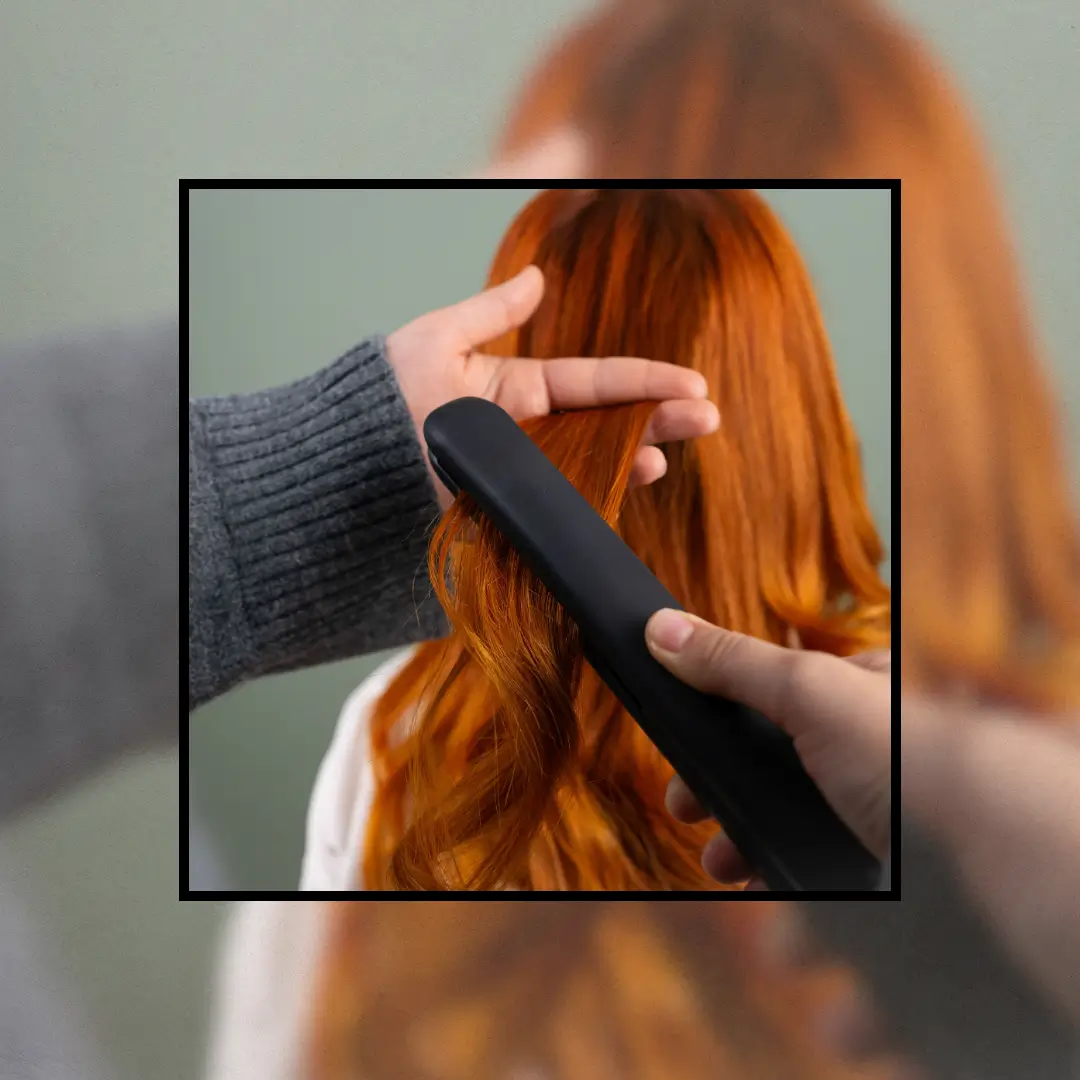
If you’ve ever clamped a flat iron onto slightly damp hair and heard that dreaded sizzle, you already know: Hair straighteners demand a little respect. (That smell? Unforgettable, and NOT in a good way.)
Used right, a straightener can give you sleek, glossy hair in minutes. Used wrong, it can leave you with breakage, split ends, and the occasional burned forehead.
A few simple habits make a huge difference, though.
Below, I’m sharing 12 simple tips for using a hair straightener safely, from choosing the right temperature to protecting your hair (and your fingers), so you get smooth strands without the damage.
1. Always Use a Heat Protectant
If you only take one tip from this list, make it this one. A heat protectant forms a light barrier on your strands that helps reduce moisture loss and damage from hot tools. Apply it evenly from mid-lengths to ends before you straighten, and comb it through so every section is covered. Need a new one? Here’s my roundup of the best heat protectant products.
EVERYONE’S CLICKING ON:

Humectants for Low Porosity Hair: What They Are and How to Use Them
The 4 Best Gels for Low Porosity Hair (Hold Without the Crunch)


Low vs. High Porosity Hair: Signs, Tests, and the Best Routine for Each
7 Best Deep Conditioners for Low-Porosity Hair That Actually Absorb

How to Moisturize Low Porosity Hair (Without the Greasy Buildup)
2. Start With Completely Dry Hair
Never, ever straighten damp hair. When hot plates hit wet strands, the water inside heats up fast, which can weaken and damage the hair. (That sizzle you hear? Not a good sign.) Make sure your hair is 100% dry before you start, and if you blow-dry first, use a lower heat setting to keep total heat exposure down.
3. Choose the Right Temperature for Your Hair Type
Hotter isn’t always better. The highest setting is rarely necessary, and using more heat than your hair needs is one of the fastest routes to damage. Start low and only turn it up if your hair isn’t straightening. As a rough guide:
| Hair type | Suggested temperature |
|---|---|
| Fine, thin, or damaged hair | About 250°F to 300°F |
| Medium or normal hair | About 300°F to 375°F |
| Thick, coarse, or very curly hair | About 375°F to 425°F |
If your hair is color-treated or bleached, stay toward the lower end, since it’s already more fragile.
4. Invest in a Quality Straightener
A good straightener makes styling faster and gentler. Look for adjustable temperature settings (so you’re not stuck on one scorching setting), ceramic or tourmaline plates that heat evenly, and an automatic shut-off feature. Plates that heat unevenly create hot spots, which means more passes and more damage.
5. Work in Small Sections
It’s tempting to grab big chunks of hair to save time, but small sections of about one to two inches straighten more evenly in a single pass. Clip the rest of your hair out of the way and work from the bottom layers up. You’ll end up spending less time with the iron on your hair overall.
6. Do One Slow Pass Instead of Several Quick Ones
Going over the same section again and again is a recipe for damage. Instead, glide the straightener slowly and steadily from root to tip in one smooth pass. If a section still isn’t straight, let it cool for a moment before trying again, rather than going straight back in.
7. Keep It Moving
Never hold the straightener still on one spot, even for a few seconds. Clamping down and pausing concentrates heat in one area and can leave creases, kinks, or scorched patches. Keep a light grip and steady movement, and you’ll get smoother results with less damage.
8. Clean Your Plates Regularly
Product buildup from heat protectants, serums, and hairspray can bake onto your plates over time. That residue makes the plates heat unevenly and can tug on your hair. Once your straightener is unplugged and completely cool, wipe the plates with a soft, damp cloth (or a little rubbing alcohol for stubborn buildup), then let them dry fully.
9. Protect Your Skin
Straightener plates can get hot enough to cause a nasty burn in seconds. Be extra careful around your forehead, ears, and neck, and keep the plates away from your scalp when straightening near the roots. A heat-resistant glove is an inexpensive way to protect your fingers, especially if you’re still getting the hang of things.
10. Give Your Hair Heat-Free Days
Even with all the right precautions, daily heat styling adds up. Try to give your hair a few heat-free days each week. Lean on braids, buns, or overnight heatless styles, and refresh straightened hair with dry shampoo instead of reaching for the iron again.
11. Never Leave It Unattended
This one is about your home, not just your hair. Always unplug your straightener as soon as you’re done, and let it cool on a heat-resistant mat or surface, away from towels, carpets, and anything flammable. If you’re forgetful (no judgment), a straightener with an automatic shut-off feature is worth its weight in gold.
12. Keep Your Hair Healthy Between Styling Sessions
Healthy hair handles heat much better than dry, brittle hair. Deep condition weekly, get regular trims to remove split ends, and sleep on a silk pillowcase to reduce friction and breakage. Here’s more on the benefits of a silk pillowcase for hair. If your hair is bleached or color-treated, a smoothing treatment may also help, so read up on keratin treatments for bleached hair first.
Signs of Heat Damage
Not sure if your straightener is taking a toll? Watch for these signs:
- Split ends and breakage: Ends that fray, snap, or look thin and wispy.
- Dryness and dullness: Hair that feels rough and has lost its natural shine.
- Frizz that won’t quit: Especially frizz that shows up right after straightening.
- Changes in texture: Curls that won’t spring back the way they used to.
- Tangles: Hair that knots easily and feels harder to comb.
Heat damage can lift and roughen the hair’s cuticle, which makes strands more porous and more likely to lose moisture.
If that sounds familiar, scale back on heat, trim off the worst of the damage, and focus on moisture. These DIY hair masks for high porosity hair are a great place to start.
The Bottom Line
Using a hair straightener safely comes down to a few simple habits: protect your hair, start dry, keep the heat as low as you can, and keep the iron moving.
Add regular heat-free days and a little extra TLC, and you can enjoy sleek, glossy hair without frying your strands in the process.