If you’ve ever followed a viral hair routine to the letter and ended up with a greasy, product-coated mess (while your best friend’s hair came out looking like a shampoo commercial), porosity might be to blame.
Porosity is simply how easily your hair absorbs and holds onto moisture, and it explains why the same deep conditioner can work wonders for one person and just sit on top of another person’s strands.
Low-porosity hair has tightly sealed cuticles that resist moisture, while high-porosity hair soaks it right up… and then lets it escape just as fast. (Think sealed jar vs. kitchen sieve.)
Once you know which one you’re working with, shopping gets a lot easier: You’ll know when to reach for lightweight oils and when your hair is begging for richer, sealing oils.
Below, I’m breaking down high vs. low porosity hair, including how to tell them apart, the signs of each, and the routines that actually work for both.
What Is Hair Porosity?
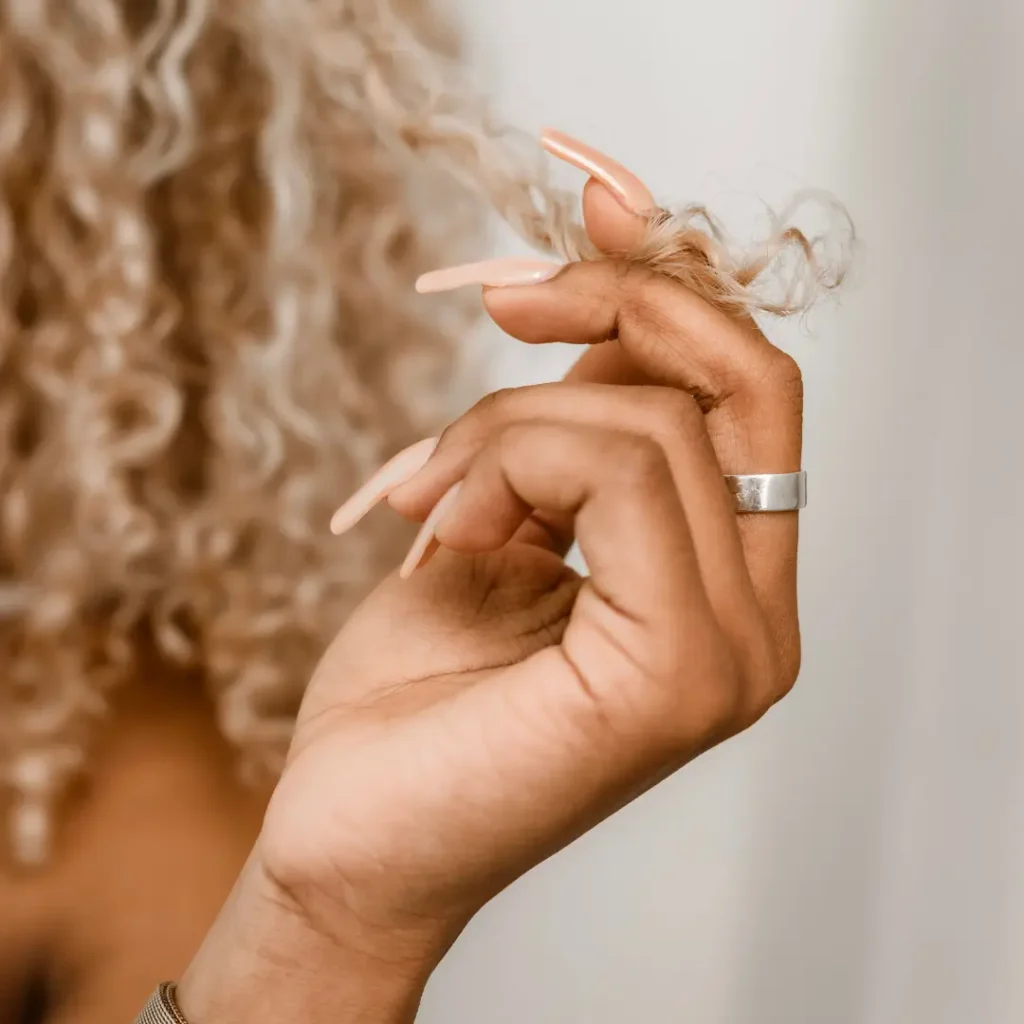
Hair porosity describes how easily water, oils, and products can get into your hair and how well they stay there.
It all comes down to the cuticle, the outermost layer of each strand. Picture it as a row of overlapping roof shingles: When they lie flat and tight, very little gets in or out.
When they’re raised or damaged, moisture slips in easily but escapes just as quickly.
Porosity is partly genetic, but it isn’t fixed. Bleach, color, chemical straightening, heat styling, and even sun exposure can all lift or damage the cuticle and raise your porosity over time.
That’s why it’s common to have lower porosity at the roots and higher porosity on older, more processed ends.
High vs. Low Porosity Hair at a Glance
| Low porosity hair | High porosity hair | |
|---|---|---|
| Cuticle | Flat and tightly packed | Raised, gapped, or damaged |
| Absorbs water | Slowly | Very quickly |
| Holds moisture | Well, once it’s in | Poorly, loses it fast |
| Drying time | Takes ages to air-dry | Dries quickly |
| Product behavior | Sits on top, builds up easily | Absorbs fast, needs reapplying |
| Common causes | Mostly genetics | Bleach, color, heat, chemical treatments |
| Loves | Light oils, humectants, heat | Butters, rich creams, some protein |
| Struggles with | Heavy butters, too much protein | Frizz, breakage, tangles |
Keep in mind that these are general patterns, not strict rules.
Hair texture, thickness, and density all play a role, so you might recognize yourself in a little of both columns.
Signs of Low Porosity Hair
If your hair seems to have trust issues with moisture, you might be low porosity. Common signs include:
- Water beads up on your hair in the shower before it finally soaks in.
- Your hair takes forever to air-dry (we’re talking hours, not minutes).
- Products sit on top of your strands and leave a coated or greasy feel.
- Your hair feels dry and limp at the same time.
- Rich butters and protein-heavy treatments make your hair stiff or straw-like.
- Color and chemical treatments take longer to process.
Signs of High Porosity Hair
High-porosity hair is the opposite: it’s thirsty, but it can’t hold onto anything for long. You might notice:
- Your hair gets wet almost instantly and dries quickly.
- It feels dry again just a day or two after washing.
- Frizz shows up the second there’s a hint of humidity.
- Your ends tangle, snap, or split easily.
- Your hair drinks up product and still asks for more.
- Color fades faster than you’d like.
RELATED POSTS:

Humectants for Low Porosity Hair: What They Are and How to Use Them
The 4 Best Gels for Low Porosity Hair (Hold Without the Crunch)

7 Best Deep Conditioners for Low-Porosity Hair That Actually Absorb

How to Moisturize Low Porosity Hair (Without the Greasy Buildup)

Is Coconut Oil Good for Low Porosity Hair? Here’s What You Need to Know
How to Test Your Hair Porosity
The most popular method is the float test: Drop a clean, product-free strand into a glass of room-temperature water and watch for a few minutes.
If it floats, your hair is likely low porosity. If it sinks quickly, it’s likely high porosity. If it hovers in the middle, you’re probably medium.
That said, the float test isn’t perfect. Leftover product, oils from your skin, and even the surface tension of the water can affect the results.
For a more reliable read, try these too:
- The spray test: Mist a section of clean hair with water. If the droplets bead up and sit there, you’re likely low porosity. If they disappear right away, you’re likely high.
- The slide test: Run your fingers from the tip of a strand toward the root. Smooth means a flat cuticle (lower porosity), while bumpy or rough suggests a raised cuticle (higher porosity).
- The drying test: Notice how long your hair takes to air-dry after washing. Hours points to low porosity; super quick points to high.
Your best answer comes from all of these together, plus how your hair actually behaves day to day.
What About Medium Porosity?
Medium (or normal) porosity hair sits right in the sweet spot. It absorbs moisture fairly easily, holds onto it well, takes color predictably, and generally gets along with most products.
If that sounds like you, congrats… you’ve basically won the hair lottery.
Just keep in mind that heat and chemical processing can push medium porosity hair toward high porosity over time, so a little protection goes a long way.
How to Care for Low Porosity Hair
With low porosity hair, the goal is getting moisture in without smothering your strands. (For the full routine, see my guide on how to treat low porosity hair.)
- Use warmth: Wash with warm water and deep condition under a heat cap or hooded dryer to help lift the cuticle.
- Go light: Choose water-based leave-ins and light oils like grapeseed, argan, and jojoba over heavy butters.
- Lean on humectants: Glycerin, aloe, and honey help draw water into your hair.
- Clarify regularly: A clarifying shampoo every few weeks keeps buildup from blocking moisture.
- Easy on the protein: Low porosity hair is prone to protein overload, so read up on whether low porosity hair needs protein before reaching for a strengthening mask.
For step-by-step tips, check out how to moisturize low porosity hair and my picks for the best deep conditioners for low porosity hair.
How to Care for High Porosity Hair
High-porosity hair has the opposite problem: Moisture gets in easily, so the real job is keeping it there.
- Seal it in: Layer a leave-in, a cream, and a richer oil or butter to lock in moisture. The LOC method (liquid, oil, cream) tends to work well here.
- Embrace richer products: Shea butter, castor oil, and thick creams that weigh down low porosity hair are often exactly what high porosity hair needs. These oils for high-porosity hair are a great place to start.
- Deep condition often: Weekly treatments help fill in gaps along the cuticle. Try one of these deep conditioners for high porosity hair or a DIY mask for high porosity hair.
- Add some protein: Occasional protein treatments can help patch weak spots and reduce breakage.
- Protect from damage: Use a heat protectant every time you style, rinse with cool water, and sleep on a silk pillowcase to cut down on friction.
Can You Change Your Hair’s Porosity?
Sort of. Low porosity hair is mostly genetic, so you can’t permanently “open up” your cuticles (and honestly, you wouldn’t want to, since a tight cuticle means healthy hair).
What you can do is work with it, using heat, lightweight products, and regular clarifying to get moisture in more easily.
High porosity hair is often the result of damage, so you can’t fully reverse it either.
You can, however, make it behave more like medium porosity hair with consistent deep conditioning, sealing, protein when needed, and gentler styling.
Over time, trimming off damaged ends and protecting new growth will lower your overall porosity.
The Bottom Line
High vs. low porosity hair really comes down to one question: Does your hair struggle to let moisture in or struggle to keep it there?
Low porosity hair needs warmth, lighter products, and less buildup. High porosity hair needs richer products, sealing, and protection.
Figure out which camp you’re in, and suddenly that “miracle” product your friend swears by makes a lot more sense… or a lot less.
PIN FOR LATER 📌